Well, today's the day AI agents got their first bank account
 By Andy Webb
The Linux Foundation just launched the seemingly obscure named 'x402 Foundation'. If that sentence means nothing to you, let me rephrase it: the organisations that control how money moves on the internet just agreed that AI agents need their own payment system. And now they've built one.
The founding members include Visa, Mastercard, American Express, Stripe, Google, Amazon Web Services, Microsoft, Shopify, Cloudflare, Coinbase, and Circle. Remarkably, these companies rarely agree on anything without a lawsuit so it's quite incredible they managed this in mere months. That should tell you everything about how seriously they're taking this, and perhaps even a political driver behind it to secure western domination in this evolving financial space may have helped.
I've spent the last week writing about AI agents that write code, leak source code, and ship 50 features in 52 days. Reflecting on that, all of what we write or talk about AI agents doing is handling information. Today is different because from today, and forever more, AI agents can now handle money.
So what is x402 and why does it matter
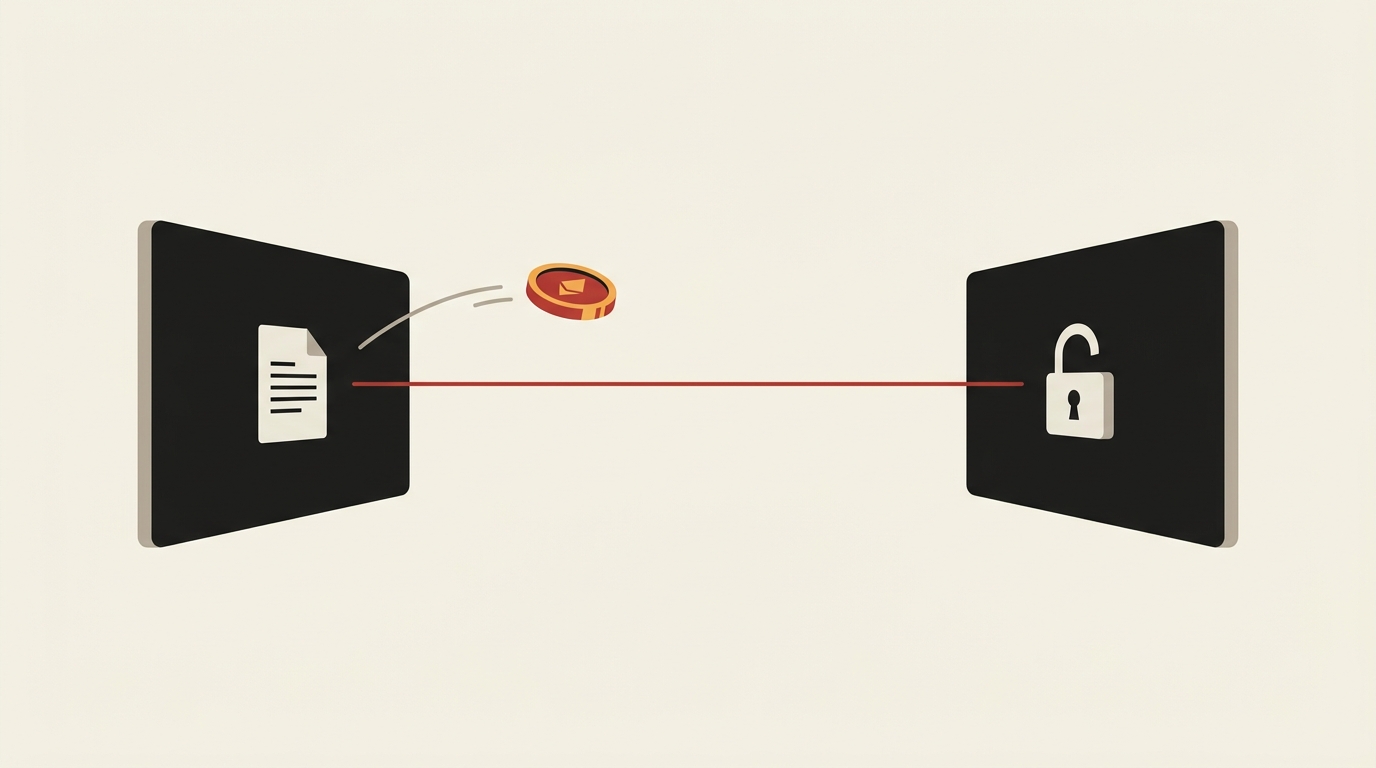
The internet's pioneering engineers reserved the HTTP status code 402 "Payment Required" back in 1997. For twenty-nine years, nobody used it, ever. It just sat there, waiting for a purpose.
x402 is now what gives it one.
Built by Coinbase and now governed by the Linux Foundation, x402 is an open protocol that embeds payments directly into web interactions. An AI agent can request a resource. A server can respond: 402 Payment Required, here's what it costs. The agent pays instantly fractions of a cent in stablecoins. No credit card. No billing system. No human involvement. The agent gets the data and moves on.
This means the Matrix now costs money. Your AI agent can now pay for an API call ($0.003), a premium data feed ($0.01 per request), a code review ($0.05), or a browser rendering session ($0.001) without you lifting a finger. No subscriptions. No invoices. No procurement department. Pay for exactly what you use, at the moment you use it. Whether that's good or bad I'm not yet sure…
Our traditional payment rails can't do this. Just try charging $0.003 on a Visa card. The processing fee alone would be several hundred times the transaction value. Credit card networks were built for humans buying things in shops. They were never designed for machines making thousands of micro-transactions per hour.
That's why this needed its own protocol. And that's why every major payment company in the world just signed up.
Just think of the numbers here
This is where it gets real though. Because this isn't a whitepaper; it's already happening.
AI agents have already processed $31 billion in payments on Solana in 2025. The Solana network has handled over 15 million on-chain agent payments. As of February 2026, over 50 million in x402 transactions have already been processed. Solana currently handles 65% of all x402 volume, a big part of its attractiveness as a blockchain network, offering sub-cent transaction fees and sub 400-millisecond settlement times. It's pretty sweet!
Coinbase CEO Brian Armstrong posted on X in March: "Very soon there are going to be more AI agents than humans making transactions. They can't open a bank account, but they can own a crypto wallet."
Vibhu Norby, the Solana Foundation's chief product officer, went further at the Digital Asset Summit in New York last week when he said "99.99% of all onchain transactions in 2 years will be driven by agents, bots, and LLM-based wallets and trading products. The UI is disappearing into language."
It's normal for the new kid on the block to have a slightly inflated view of the market and whether those numbers prove accurate or not, the direction is becoming very clear. The agentic economy isn't a thought experiment. It's a market with real volume, real infrastructure, and now a formal governance body under the Linux Foundation.
The internet's missing payment layer is coming
There's something rather poetic about this. The web was built on open protocols. HTTP for content. SMTP for email. DNS for addresses. The one thing the internet never got right though was payments. For thirty years, we've bolted on credit cards, PayPal, Stripe, and a dozen other proprietary layers. Every online purchase we make goes through a chain of intermediaries that were designed for the physical world.
x402 is the argument that payments should work like the rest of the internet: open, programmable, instant, and very universal. Cloudflare's Chief Strategy Officer called it "a fundamental pillar of how value moves across the Internet." Stripe described it as "financial infrastructure for the agentic commerce era." And AWS talked about making "agent-native payments a reality."
These are not the usual speculative statements from crypto startups. These are the companies that currently process a very significant portion of global digital commerce telling you, in writing, that the model is now changing.
Solana was the first major blockchain to place a machine-readable "skill file" at the root of its website, so AI agents can autonomously learn how to create wallets, execute transactions, and interact with on-chain programmes without any human guidance. That's not a feature. That's an invitation. That's acquisition strategy. Come on in, the door's open, and bring your wallet.
Two standards, one war….again!

It certainly wouldn't be technology without a standards battle ( I still miss my old Betamax). While x402 is gathering its 'coalition of the willing' under the Linux Foundation, a competing framework called the Machine Payments Protocol (MPP), backed by Stripe and Paradigm, is preparing its own assault on the market.
MPP focuses on session-based payments. This is where an AI agent pre-loads funds and executes multiple transactions within a session without repeated approvals. Think of it like a pre-paid tab at a bar (ohhh yes!) versus paying for each drink individually (Booo!). Different philosophy, same destination (Happy Andy ;)).
The fact that Stripe appears in both camps is quite telling. They're hedging their bets, which is exactly what a payment infrastructure company should do when two competing standards emerge that could reshape how money moves online. For businesses building on AI, this standards war matters. Picking the wrong payment rail is going to be expensive to undo. You can watch both, or commit to neither until the dust settles. But who ever made a successful venture out of that. Just what the tech industry needed hey, another make or break moment.
There are risks nobody wants to talk about
I'd be doing you a disservice if I wrote this as a pure hype piece, so let's talk about some of the uncomfortable bits.
Who pays when an agent overspends is the obvious first question? If your AI agent makes 50,000 micropayments overnight and the total hits five figures, whose problem is that going to be? The liability framework for an autonomous spending agent doesn't yet exist. I can see the "Have you been missold car finance" claims lawyers rubbing their hands already. Current consumer protection law assumes a human made the purchase. When a machine does it, the legal ground is genuinely uncharted territory.
Machine-to-machine commerce is absolutely unregulated. The financial regulation framework has categories for consumer transactions, business transactions, and institutional transactions. There is no current category for "AI agent buys API access from another AI agent at 03.00 with no human aware it's happening." (This brings back fond memories of buying random objects off home shopping channels at 03.00 after a night at the pub) I'm sure the regulators will catch up. The question is how much damage happens before they do.
The stablecoin dependency. The entire x402 ecosystem runs on stablecoins. Stablecoins are not traditional currencies. They're tokens pegged to the US dollar, designed to stay steady in turbulent times (Hence the name). If a major stablecoin were to depeg during high-frequency agent trading, the consequences could cascade faster than any human could intervene. Stablecoins aren't really that stable….they promise they have reserves but are never really audited to see what they do with them e.g. lend them out to risky high risk/reward trades. We saw a version of this with TerraUSD in 2022. Imagine that happening with AI agents executing thousands, or millions of transactions per second.
Is $31 billion real economic activity? That volume figure does sound impressive. However how much of it was genuine value exchange versus AI agents trading with other AI agents in circular patterns is unknown? The crypto industry has a long and colourful history of inflated volume metrics. I'd treat that number with healthy scepticism if I was you until independent verification catches up.
So if you run a business what does this mean for you
Strip away the protocol specifications and the crypto blurb. Here's what matters for you if you're running a business…
Your pricing model might be obsolete sooner than you think. The subscription model that dominates SaaS was designed for humans who forget to cancel. I mean, that's the truth as I scrape the dust off my gym membership. AI agents don't forget. They'll pay for exactly what they use and not a penny more. If your business model depends on subscribers who barely use your product, the agentic economy is coming and is going to eat your margins. Start thinking about per-request and per-outcome pricing alongside your existing plans.
Your AI tools will start spending money like it's payday. We're not just talking about generating text or writing code. Or paying for data, compute, premium APIs, and services on your behalf. This is a totally new category of operational cost that doesn't appear in almost any companies' budget. You'll need spending limits, oversight dashboards, and approval workflows for agent expenditure. This is procurement meets DevOps, and nobody has the playbook yet.
Developer infrastructure is the big investment opportunity. If the agentic economy is real, the value will likely accumulate in the infrastructure layer: payment rails, identity systems, monitoring tools, compliance frameworks. Not in the agents themselves. The agents are just commoditising. The infrastructure they desperately need to operate on is not. Cloudflare and Vercel are already adding x402 support. Many more will follow.
The agent-first business is coming, get yourself ready. If 99% of transactions will come from agents, then the businesses that optimise for agent customers will far outperform those still designing for human ones. Machine-readable documentation, API-first pricing, skill files at the root of your domain. These aren't nice-to-haves. They're the equivalent of having a website in 2005.
It's been twenty-nine years in the making
HTTP 402 "Payment Required" was reserved in 1997. The visionary engineers who wrote the HTTP specification knew the internet would eventually need a native payment layer. They just couldn't build it yet. The financial infrastructure wasn't ready, the currency wasn't right and the use case didn't exist.
Twenty-nine years on, all three problems have now been solved. Stablecoins can provide the currency, blockchains like Solana can provide the settlement and AI agents now provide the use case that finally makes micropayments not just viable, but essential. I think AI has just rescued web3!
Today has gone under the tech radar but it really is a monumental day, the world's largest payment companies, cloud providers, and technology platforms formally agreed that AI agents need their own financial system. They didn't announce a pilot and they didn't just publish a research paper. They launched a foundation, contributed protocol, and named the governing body.
If you're not thinking about what this means for your business, your products, and your pricing, you're already a little behind. Don't panic, but the agents aren't waiting for permission. And they've already got the wallet.
The sharpest AI tools intel, weekly.
Join thousands of professionals navigating the AI tools landscape. Free, no spam, unsubscribe anytime.